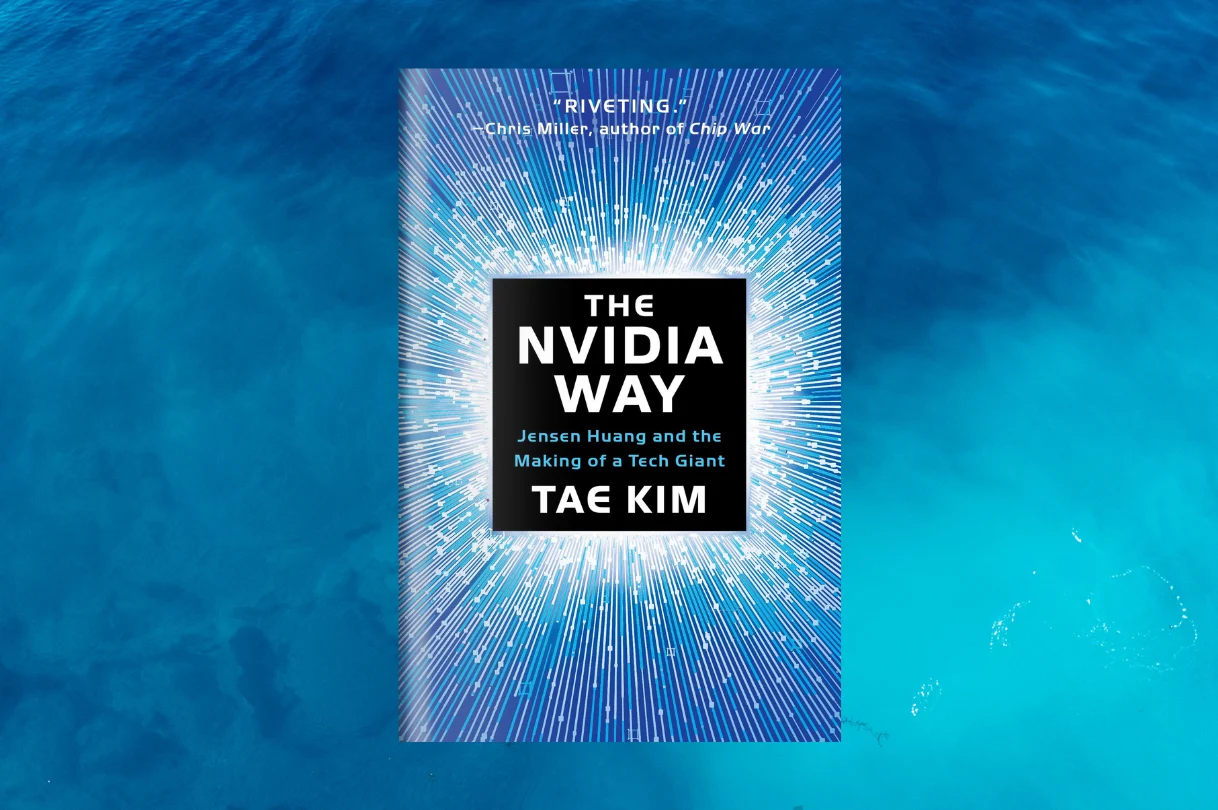
“The Nvidia Way — a masterclass in how grit, innovation, and relentless leadership turned a scrappy startup born in a San Jose Denny’s into the cornerstone of the AI era.” – Florian, Co-Founder of arvy
Tae Kim's “The Nvidia Way” traces Nvidia's rise from its dramatic founding in 1993 through early near‑death experiences — including failed chips like NV1 and NV2 — to its later dominance in AI powered by GPUs and CUDA. The book illuminates Jensen Huang’s intense, transparent leadership style, driven by a flat structure, “30‑days‑from‑doom” mindset, and an obsession with avoiding complacency. It celebrates how strategic pivots — toward scientific computing, data centers (Mellanox acquisition), and AI — were underpinned by a culture of accountability, speed, and engineering rigor.
10 Key Lessons from The Nvidia Way
Embrace Adversity as Fuel Nvidia’s earliest product failures, like the NV1 and NV2, could have ended the company. Instead, the team used these setbacks as catalysts to refine their technology, strengthen their culture, and prepare for future breakthroughs.
Stay Paranoid, Stay Agile Jensen Huang’s “30 days from going out of business” mantra instilled a constant sense of urgency. This mindset prevented complacency and encouraged rapid decision-making in a fast-changing industry.
Flat Structure Encourages Ownership By avoiding layers of middle management, Nvidia ensured that engineers and designers felt accountable for their work. This structure empowered employees to take initiative and move projects forward quickly.
Direct Feedback Over Bureaucracy Huang personally reads “Top-5 Things” emails from employees, cutting through red tape. This creates a culture where issues are addressed directly and innovations can be acted upon without delay.
Lead With Technical Depth As an engineer himself, Huang brings a hands-on understanding of complex technical challenges. This allows leadership to make smarter bets on technology and product direction.
Learn Fast From Failure Each failed product became a learning lab for Nvidia. Rather than avoiding risk, the company leaned into experimentation, knowing that quick recovery is a competitive advantage.
Create New Markets via Vision Nvidia didn’t just follow existing demand — it redefined the role of GPUs from gaming to scientific computing and AI. This bold repositioning opened entirely new multi-billion-dollar markets.
Invest Strategically Acquisitions like Mellanox were not random; they fit a long-term vision to dominate the data-center space. Nvidia used targeted investments to expand capabilities and secure critical technologies.
Avoid Complacency via Culture Even in times of success, Huang reinforces that the company is always on the edge of disruption. This cultural discipline ensures Nvidia keeps innovating instead of resting on its laurels.
Persistence Wins the Long Game Nvidia’s three-decade journey shows that vision combined with relentless execution can outlast short-term setbacks. The company’s story is proof that endurance is a strategic weapon.
NVIDIA CEO Jensen Huang's Vision for the Future
arvy’s takeaway:The Nvidia Way is both a riveting narrative and a blueprint of visionary leadership under relentless pressure. It showcases how unwavering focus, direct communication, and engineering-led culture can reshape industries. For anyone passionate about business history, leadership, or the AI revolution, it's a modern classic — and a fast-paced, edge-of-the-seat read.
Join a growing community of informed investors and get our ”Weekly by arvy” newsletter full of investing stories, smart ideas and a little inspiration to keep you moving forward.